

Fading away
She Came In Asking About Ketamine

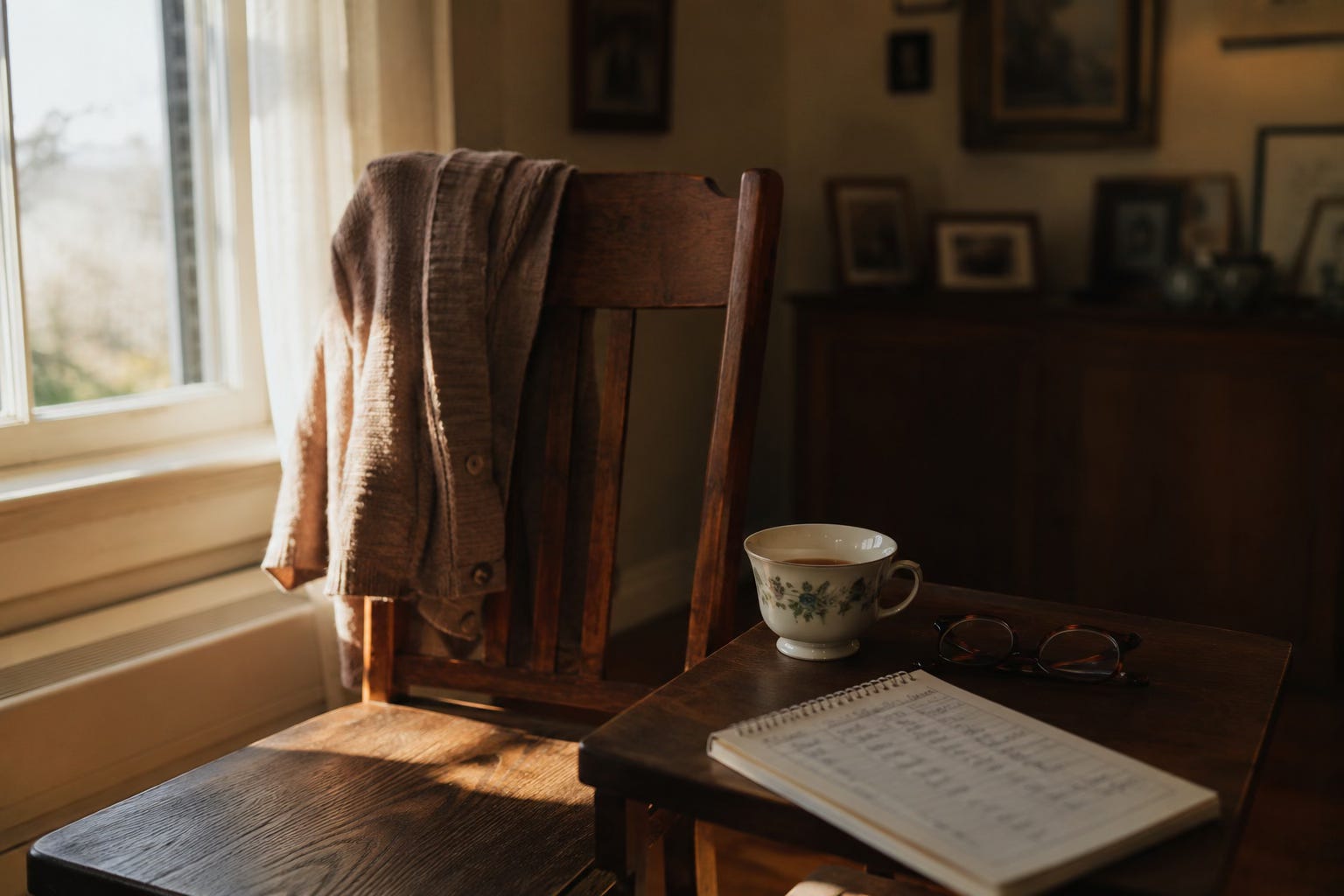
She came in asking about ketamine.
Her therapist had recommended it. I had not seen her in a few years, and when she walked in, I could tell she had been crying recently. She sat down carefully. There was a tentativeness in her body that had not been there before, the small physical caution of someone who has recently learned not to trust her own steps.
We started where I usually start. Not with the medication. With what was actually going on.
A few months ago she had fallen. Her foot had caught at the top of the stairs in her house, and she had pitched forward. No concussion, the hospital told her. The scans were clean. The bruising was bad. The damage that did not show on imaging was harder to name. She had lived in that house with her husband for decades. He had been gone five years. Three floors, a basement, a yard, all the small daily tasks of homeownership that had once felt ordinary and now felt like a series of small invitations to disaster.
I listened. And after some time I offered what felt like a reasonable suggestion. Have you considered scaling down. A smaller place. An independent apartment in a high rise. Less to manage. Less to worry about.
She got upset.
I assumed at first that she was attached to the house. The years, the memories, the husband.
Then she told me about a phone call she had received recently. A man had told her that her account had been hacked, that she needed to move money to protect it, that he was there to help. She had thought he was official. She had almost done what he asked. There was already a charge on her account she had not made, five hundred dollars, which the bank had frozen without her knowing. When she went to move the money the scammer wanted, the bank flagged it and asked her about the charge. That was the moment she understood she had been fooled.
She told her son.
He came home and screamed at her. How could you be so stupid.
She told me this and her hands shook a little in her lap. And I sat there for a second and realized what was happening in the room.
Here I was. Another man. Telling her she could not live where she had been living. Telling her, in effect, that the life she had been managing on her own was no longer something I trusted her to manage. I had not used her son’s words. I had not raised my voice. But the message underneath what I had said was uncomfortably close to his. You are not equipped to do this anymore. We need to make decisions for you.
I stopped. I was no longer the clinician with a recommendation. I was someone there to listen.
We talked for a long time after that. About the scam, and how sophisticated these calls have become, and how the operations behind them are run like businesses. Millions of Americans get caught in them every year. This was not a failure of her mind. It was the success of an industry built specifically to exploit trust. I wanted her to hear that as many times as she needed to hear it before she left the room.
We talked about her depression. Her anxiety. The tremor in her hands she had been trying to hide. Her sleep. What she was eating. Whether she was moving her body at all since the fall.
Then we talked about ketamine. Carefully. Fully. What it can do. What it cannot do. Who tends to benefit. The questions she should be asking. I asked her not to decide yet. To go home and write down everything that came to mind, and to bring the list back next month, and we would go through it together before she chose anything.
We made a different kind of list too. Physical therapy for her balance. A schedule for meals and sleep. A few things she wanted to do in the house, on her own timeline, on her own terms. No high rise. Not yet. Maybe not ever, and that was her decision to make.
She looked different when she left. Not fixed. Not even much lighter. But she was sitting in her body in a way she had not been when she came in.
Later that afternoon another woman sat in the same chair. Late seventies. Husband gone about a year. Still untangling the estate. Living in a multi-level house she could no longer manage easily. We talked about downsizing, and she was reluctant, and then she was less reluctant when she let herself imagine how much weight it would lift. We talked about her sleep, her exercise, the food she was eating alone now. And then we talked about the calls she had been getting. The texts from numbers she did not recognize. The voices that sounded official. I told her to walk into her bank and ask them to help her secure her accounts. She wrote it down.
Two women. Different husbands. Different houses. Different years of widowhood. The same quiet erosion.
This is what I keep noticing in my older patients. The depression and the anxiety are real, and they need treatment. But underneath the symptoms there is often something else. A self that has been competent for seventy years is starting to feel unreliable. The body has begun to betray small promises it used to keep without thinking. And the people around them, the ones who love them most, are often the ones whose fear comes out the most clumsily. A son who screams. A daughter who takes over the checkbook without asking. A doctor who hears about a fall and a scam and starts suggesting a smaller life before he has finished listening.
I do not think the son is a bad son. I think he is a frightened one. He is watching his mother become someone he cannot fully protect, and he is realizing he is going to lose her, slowly, in pieces, before he loses her all at once. His anger is grief that does not yet know what it is. But it lands on her as evidence. Evidence that she is becoming what she most fears becoming.
I grew up in a culture where aging parents are folded back into the household, not slowly edged out of their own. I am not romanticizing it. That arrangement has its own cruelties, its own losses of privacy and autonomy. But it does not ask the elder to prove, again and again, that she is still worth consulting. It does not treat her competence as something she has to defend in every conversation. Some of what I am watching my patients endure here is not aging itself. It is the particular loneliness of growing old in a culture that mistakes diminishment for the whole story.
There is something I keep returning to in this work. When an older adult comes in newly depressed or anxious after some event, do not only ask what happened. Ask how the people around them responded. The response often does more damage than the event itself.
My job in the room with her was not to fix her depression. It was to interrupt, for one hour, the steady accumulation of evidence that she was no longer to be trusted with her own life. To be the voice in her week that did not confirm her diminishment. To slow down enough to see what was actually breaking, which was not her judgment, and not her memory, and not her ability to live in her own house. What was breaking was her sense that the world still saw her as a person who got to decide.
She is coming back next month. She will bring her list. We will look at it together.